

Get a Quote
Drop Us A Line

Charging an electric vehicle at home gives you greater control over when and where you charge. Instead of depending primarily on public charging stations, you can plug in at home and prepare your vehicle for the next day's driving. However, installing a charger requires more than mounting the equipment in your garage or driveway.
At Canadian Wire Wizards, we provide professional home EV charger installation throughout Toronto and the Greater Toronto Area. We assess your electrical panel, household load, charger requirements, wiring route, and installation location before completing the electrical work.
Whether you already own an EV or are preparing your home for one, our residential EV charger installation services provide the electrical infrastructure needed for safe, convenient home charging.
Get a Quote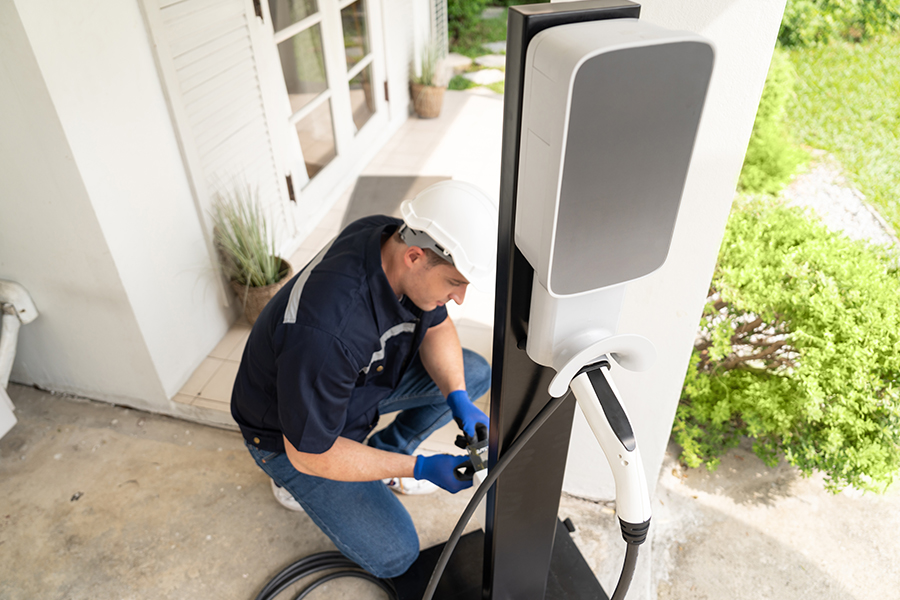
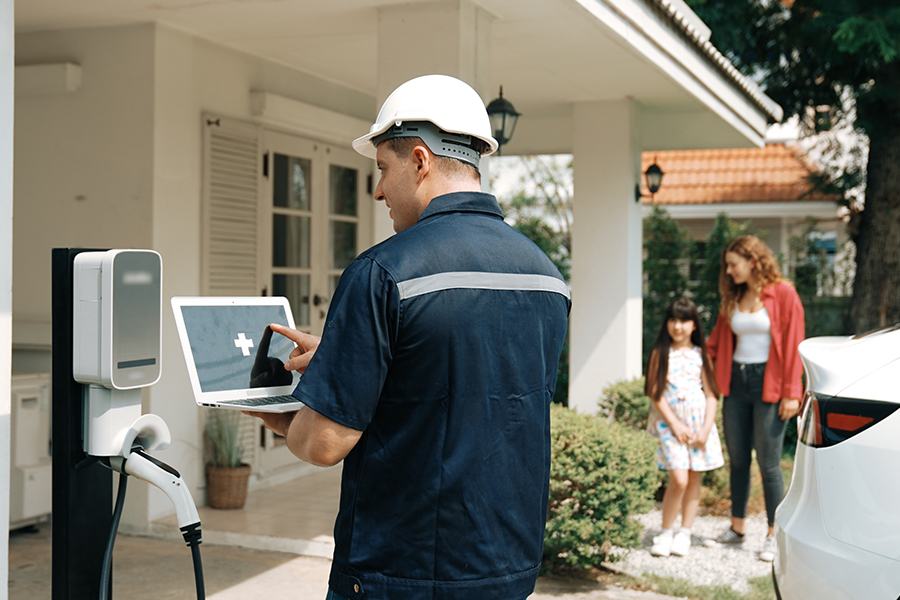
Professional home EV charger installation typically includes evaluating the home's electrical capacity, confirming charger requirements, installing a dedicated circuit and appropriate wiring, mounting or connecting the charging equipment, completing required electrical notifications, and coordinating applicable inspections.
Many homeowners choose Level 2 charging because it provides faster home charging than a standard household outlet. Before installation, a licensed electrical contractor should determine whether the existing electrical service and panel can support the additional continuous load.
At Canadian Wire Wizards, we manage the electrical requirements for EV home charging station installation from the initial assessment through final testing.
Understanding charging levels can help homeowners decide which installation best suits their driving habits.
Level 1 charging generally uses a standard household outlet. It requires minimal infrastructure but charges more slowly.
Level 2 charging uses a higher voltage dedicated circuit and provides substantially faster charging. Homeowners who drive regularly and want to recharge overnight commonly choose it.
A professional home car charger installation considers more than charging speed. We also evaluate the charger's electrical specifications, the home's available capacity, the distance from the panel, and where the vehicle is normally parked.
Your charger location affects convenience, wiring requirements, and installation complexity.
A charger may be installed in a garage or at an appropriate exterior location near a driveway or parking area. Before recommending placement, we consider where the vehicle is normally parked and how the charging cable will reach it.
Other considerations include:
Thoughtful planning during EV home charger installation can make daily charging more convenient while avoiding unnecessary wiring or construction.
Not every homeowner has an enclosed garage. EV charging equipment can also be installed outdoors when the charger and electrical components are suitable for the intended location.
Outdoor home car charger installation requires careful consideration of weather exposure, mounting, electrical connections, and cable management.
Toronto and GTA installations must account for seasonal conditions such as snow, rain, freezing temperatures, and road salt carried into driveway and garage areas.
We evaluate the proposed location and use electrical methods and equipment appropriate for the installation environment.
At Canadian Wire Wizards, we use a structured process so homeowners understand the electrical requirements before installation begins.
We discuss your vehicle, charger, parking arrangement, charging expectations, and any future EV plans.
We inspect the electrical panel and evaluate available service capacity, breaker space, household demand, and the proposed charger load.
We determine the appropriate circuit, wiring route, charger location, mounting requirements, and any additional electrical work.
Our licensed electricians install the required circuit and wiring and connect or mount the charging equipment according to applicable requirements.
We coordinate applicable ESA requirements and test the completed system to confirm proper operation.
This process allows us to approach EV home charging station installation as an electrical system upgrade rather than simply mounting charging hardware.
Electric vehicle charging installations must comply with applicable Ontario electrical requirements.
At Canadian Wire Wizards, we incorporate compliance into the project from the beginning. Depending on the scope of work, this can include ESA notification, code-compliant circuit installation, appropriate circuit protection, and inspection coordination.
Using a licensed electrical contractor helps ensure that the installation is properly documented and that the electrical work meets applicable requirements.
The cost of home EV charger installation varies because every property has a different electrical system and parking layout.
Important cost factors include:
For this reason, homeowners should be cautious about comparing quotes based only on a standard installation price.
A straightforward charger located close to a suitable electrical panel can require considerably less work than an outdoor charger positioned far from the electrical service.
We assess the property before recommending the electrical work required for the project.
A homeowner purchasing a first electric vehicle may eventually add another EV. Planning for future charging needs during the initial installation can reduce the amount of electrical work required later.
Future planning may include considering:
Our residential EV charger installation approach considers both immediate charging requirements and practical future needs.
Homeowners searching for home EV charger installation nearby should look beyond charger mounting. The installer must understand residential load calculations, circuit requirements, panel capacity, electrical permits, and inspection procedures.
At Canadian Wire Wizards, we provide:
We provide home car charger installation for homeowners throughout Toronto and the GTA with an emphasis on safe electrical planning and reliable operation.
Home charging can make EV ownership much more convenient, but the installation must work safely with your home's existing electrical infrastructure.
At Canadian Wire Wizards , we provide complete home EV charger installation and residential EV charger installation services throughout Toronto and the GTA. We assess your panel, determine electrical requirements, plan the wiring route, install the necessary infrastructure, and coordinate applicable inspections.
If you are searching for home EV charger installation nearby, contact Canadian Wire Wizards to discuss your vehicle, home electrical system, and charging requirements.
